PAU S. PESCADOR
Pau takes the form of a mortal bitch
EXHIBITION DATES: Oct 15 – Nov 21, 2026
HOURS: Wednesday – Saturday, 11 AM – 6 PM
OPENING RECEPTION: Thursday, Oct 15, 6–8 PM
WALKTHROUGH: Saturday, October 17th at 3pm
Pau Pescador in conversation with artist and writer Wayne Koestenbaum
PERFORMANCE & SCREENING: Friday, November 20th (time forthcoming)
SITUATIONS
515 W 20th Street, Floor 3, New York, NY 10011
SITUATIONS presents Pau takes the form of a mortal bitch, artist and filmmaker Pau S. Pescador’s first exhibition with the gallery. The exhibition title references Andrea Lawlor’s seminal trans novel, “Paul Takes the form of a Mortal Girl.” The protagonist of the book is a shapeshifter who transforms his body and his gender at will as he travels the country, embarking on an exploration of queer understanding and pleasure. The act of shifting “girl” to “bitch” in this exhibition title emphasizes the manner in which femininity is made derogatory. The word “bitch” translates directly to female dog and has been used to represent a wide range of femininity, from a history of negative connotation to a contemporary reappropriation of feminine/queer empowerment. While this word possesses the possibility of empowerment, like all slurs that have been reappropriated, it depends solely on usage, not erasing language history but complicating it.
This shifting of signifiers, whether it be language or physical form of a body/place, becomes Pescador’s central question in this exhibition. The artist uses her own form and immediate surroundings as a vessel to consider what it means to be a trans feminine body at this specific political moment. Through multiple media, Pescador applies a wide range of shapes and colors as well narrative strategies directly to her body to explore various day to day incidents and the imagining of personal history through elements of play. Each moment for the camera is neither a full erasure of self nor creation of a new physical form, but instead produces a disjunction of multiplicity.
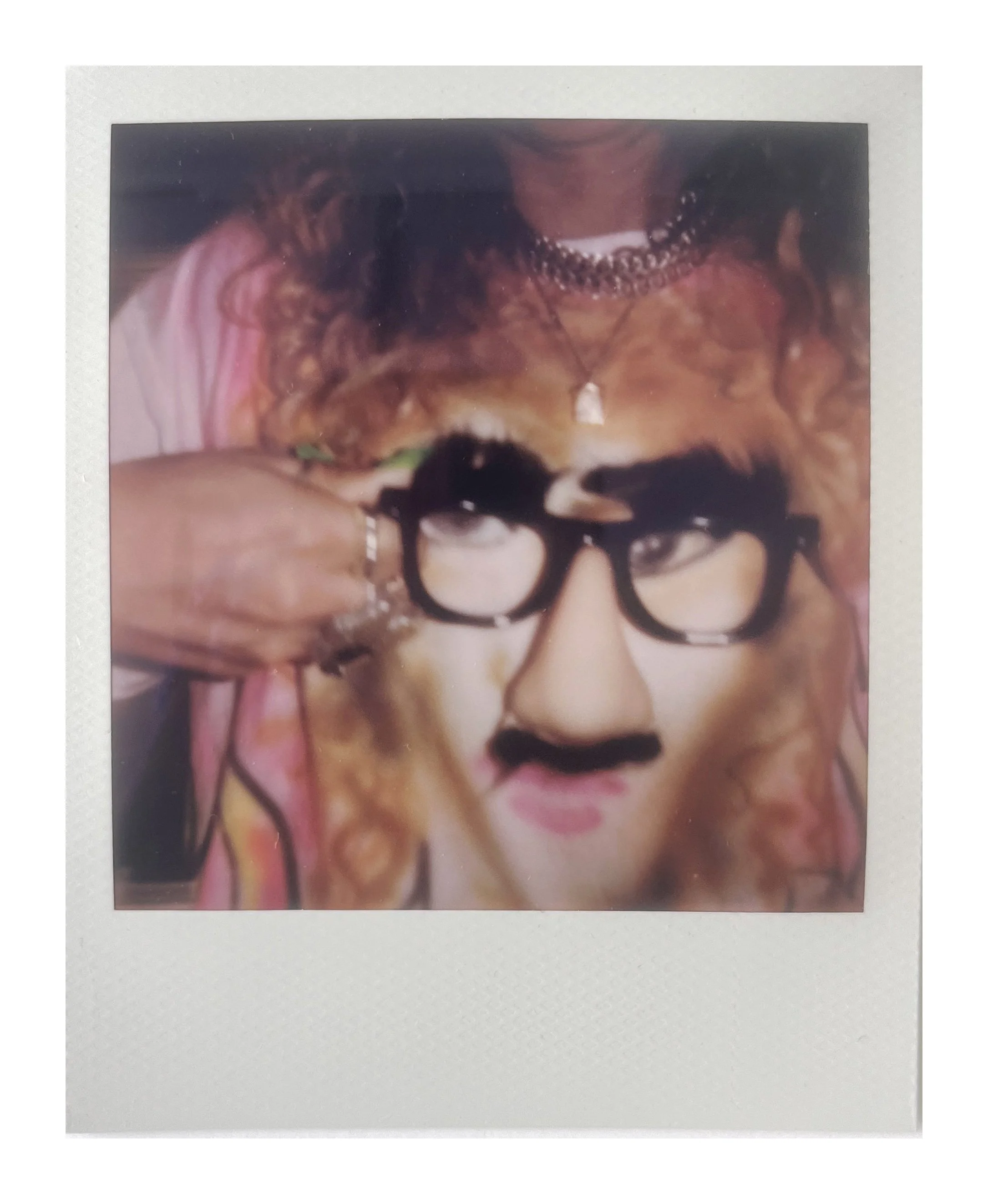
“Amor Prohibido” titles a series of Polaroid self-portraits of Pescador taken within her own home. Translated in English as “the forbidden love," the phrase has been most famously used in the title of the 1994 eponymous Selena pop song. Here, Pescador makes a play of words while reflecting upon their Latine trans identity under the second Trump presidency. This body of work is a continuation of the artist's investment in the photographic medium and its relationship to performance, and the potential for the corresponding photographic document. Polaroids have been long used within photographic history due to the immediacy of the medium (from April Dawn Alison to Andy Warhol), allowing for a moment to be transcribed into an instantaneous photographic object. The uncertainty of the Polaroid chemical process, as well as the playful imagery in Pescador’s images, produces a humorous juxtaposition as the artist poses alongside masks and puppets, reinforcing the physicality of the Polaroid object as a witness to the privacy as well as transformative of the artist's body in each image.
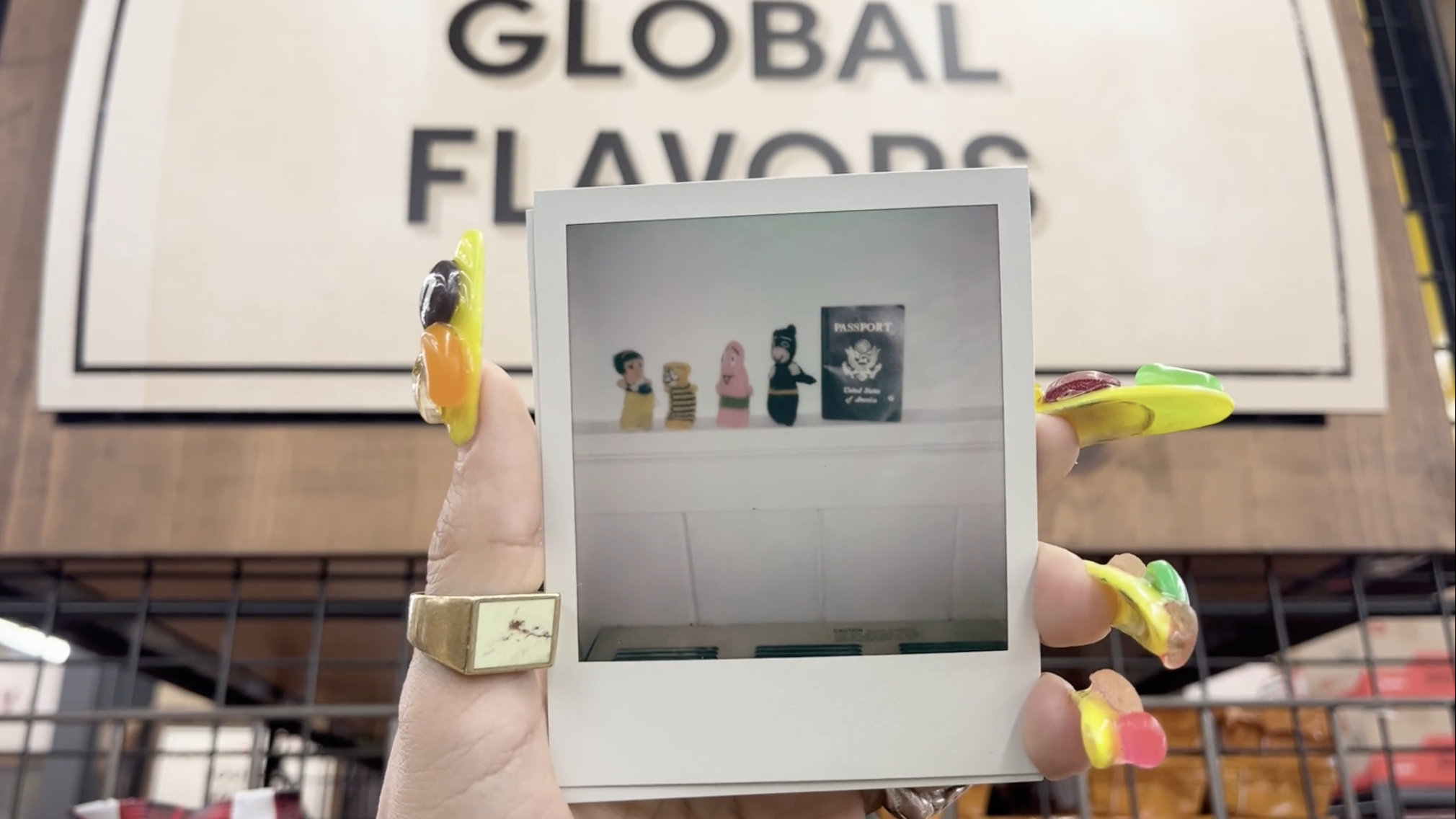
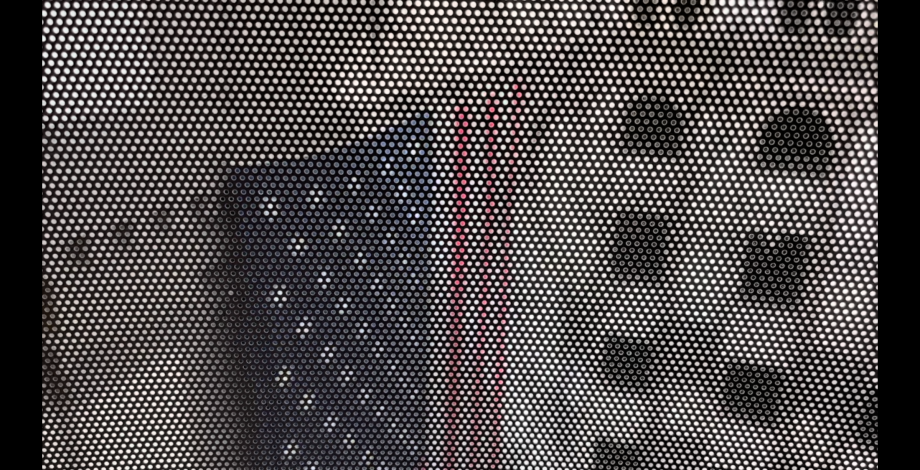
Accompanying this series of photographs is The body becomes space…(2026), a video artwork consisting of filmed and found media as well as short text segments that illuminates the artist's lived experience attempting to move through the world, at a moment when extensive laws are being written to eliminate the rights of trans people in the United States. A wide-range of content including close-up blurred found footage, light cascading into the artist's domestic space, as well as narrative vignettes shot on Polaroid film. Each Polaroid consists of a still life shot within Pescador’s personal space and made with tchotchkes and toys gathered from the artist’s studio. The Polaroids are filmed in public (groceries stores, streets, hardware stores, parks, etc) and left within these spaces. The placement of the artist's private space into the public is reminiscent of Felix Gonzalez-Torres, Untitled (Billboard of an empty bed), 1993, in which Gonzalez-Torres placed images of his empty bed on 24 billboards throughout Manhattan at the height of the AIDS crisis. Pescador’s Polaroid interventions are more ephemeral and the video does not say what becomes of these photographs, leaving this to the viewer to imagine. The accompanying narrative text discusses the artists' day-to-day struggles and foibles ranging from the humorous to fearful. The combined images and text begin to create semi-narrative illustrations of one another. The video is not just documenting the trans body within the current world, but the video is itself a performance activation, performing again and again each time it is screened.
Accompanying the exhibition, there will be a walkthrough led by Pescador in conversation with artist and writer Wayne Koestenbaum on Saturday, October 17th at 3pm.
Additionally, Pescador will be performing and presenting a video piece as part of the closing weekend with an event on Friday, November 20 (event time to be announced). Working (2026) explores the experience of transgender individuals working for the federal government. The project focuses on government service as a site for both the creation of law and the shaping of societal attitudes more broadly. From the segregation of the federal civil service to the McCarthy period, the Lavender Scare, and the enforcement of Don’t Ask, Don’t Tell, policing within and exclusion from federal employment has marked certain groups of people as being outside the borders of full American identity. This video project was originally commissioned by Museum of Contemporary Art, Arlington, and the performance by Performance Museum of Art, Los Angeles.
PAU S. PESCADOR is a contemporary trans femme nonbinary artist who works in film, photography, and performance, and currently lives and works in Los Angeles, California. She graduated with an MFA from University of California, Irvine and a BA from University of Southern California. Select exhibitions and screenings include: UV Estudios (Buenos Aires, AR); Biquini Wax (Mexico City, MX); LADRÓNgalería (Mexico City, MX); Museum of Contemporary Art, Arlington (Arlington, VA); Institute of Contemporary Art, Los Angeles; Los Angeles County Museum of Art, Los Angeles; Tyler Park Presents (Los Angeles, CA); and in Coastal/Borders, Getty Pacific Standard Time: LA/LA at Angels Gate Cultural Center among other venues. Select performances include: Salon Silicon (Mexico City, MX); Machine Projects (Los Angeles, CA); Los Angeles Contemporary Archives; Performa 2015: Colony, New York, New York; UC Berkeley: Durham Studio Theater; Performance Art Museum, Los Angeles; Hammer Museum, with KCHUNG TV, Los Angeles; REDCAT, Los Angeles; Guggenheim Gallery at Chapman University, Los Angeles; and ForYourArt, Los Angeles. Pescador’s work is held in private and public collections including Getty Research Institute, (Los Angeles, CA); Los Angeles County Museum of Art, (Los Angeles, CA);
Massachusetts Institute of Technology List Visual Art Center, (Cambridge, MA); Carolyn Campagna Kleefeld Contemporary Art Museum, Cal State Long Beach, (Long Beach, CA); and Nora Eccles Harrison Museum of Art (Logan, UT).
SITUATIONS is open to the public Wednesday through Saturday, 11AM to 6PM. To request a sales preview or for general questions, contact info@situations.us. Further information can be found online at www.situations.us